Building Worlds, Making Pennies: How Federal Labor Laws Fail to Protect Roblox Developers
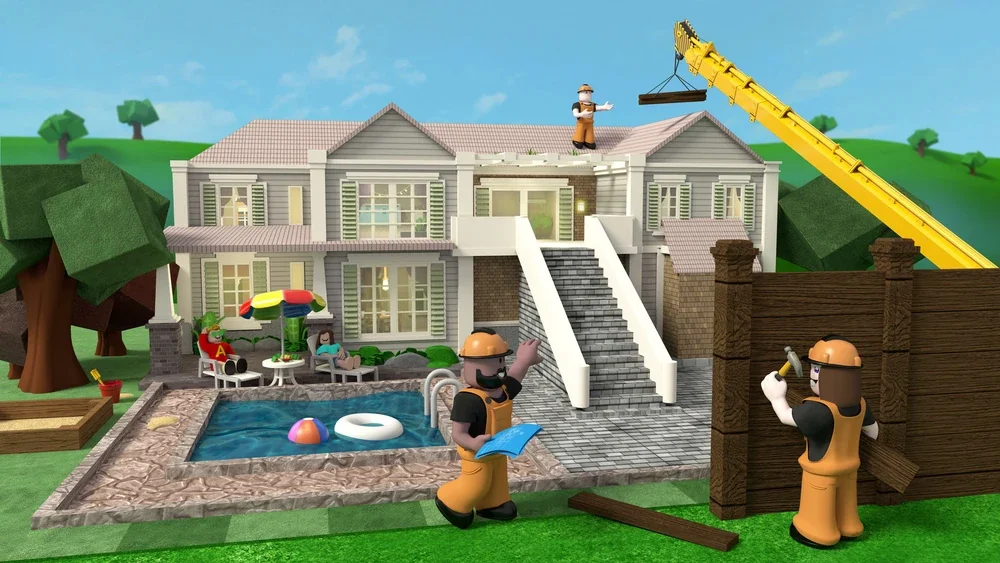
Image provided by Joritochip via Roblox Wiki.
Introduction
As of June 2025, Roblox Corporation’s size exceeded the likes of well-known game companies such as Take-Two Interactive and Square Enix, creators of Grand Theft Auto and Final Fantasy, respectively. [11] Roblox's size can be attributed to the recent surge in popularity since the pandemic, with users of all demographics spending hours in the game. The popular gaming hub advertised itself as made for kids, by kids, and that remains partly true today. While adults make up the majority of profitable Roblox developers, many children still create games and cosmetics. The Fair Labor Standards Act of 1938 (FLSA), otherwise known as the federal labor law, prohibits employees under sixteen from working in hazardous conditions. [6] Should this law prohibit Roblox’s enterprise?
The Tower of FLSA
Integral to the application of FLSA is the worker’s status as an “employee.” The courts must determine whether someone is an “employee” or an “independent contractor” and therefore not protected under the FLSA. The economic realities test helps the court decide which status best applies to a worker. The test outlines 6 factors of determining employment: the worker’s opportunity for loss/profit depending on their managerial skill, the investment in materials by the worker/company, the permanency of relationship between worker and company, the nature/degree to which the company had control over how work is performed, whether the work performed is integral to the company’s business, and whether the job requires a special skill. [15]
Galarza v. One Call Claims, LLC is a recent case where the test is used. [7] One Call Claims (OCC), contracted by Texas Windstorm Insurance Association (TWIA), hired Joel Galarza, Vicky Wimberly, and Katherine Carpenter to adjust insurance claims following Hurricane Harvey. They worked in person before switching to remote work for the last one to one and a half years. Each day, they worked about 10 hours on average, totaling more than 40 hours per week. Galarza, joined by Wimberly and Carpenter, sued OCC and TWIA for unpaid overtime wages. [7] The workers argued that OCC misclassified them as independent contractors. The district court granted the companies’ request for summary judgment after deciding that 4 of the 6 factors in the economic realities test weighed in favor of the workers being independent contractors. [7]
The workers appealed to the Eleventh Circuit Court of Appeals, which reapplied the economic realities test. The court found that the companies exercised substantial control, the workers did not have a “meaningful opportunity” for profit or loss, they did not make “meaningful investments” in equipment and materials, they had a relationship that lasted for years, and their services were integral to the companies' businesses. [7] In determining violations of the FLSA, the status of the workers as “employee” matters most. The 6 factors of the test would almost certainly favor Roblox developers as independent contractors, even though their passionate work sustains the platform. An overview of how developers monetize their “play” on Roblox would explain why they would be treated more like YouTubers or Etsy creators, who are also considered independent contractors.
Welcome to Bloxburgian Economics
Roblox users as young as 13 can easily become creators by opening the create tab in the game, which opens the Roblox Creator Hub. The creator hub houses multiple platforms for developer use: Roblox Studio, Developer Forum (DevForum), Talent Hub, Developer Exchange, and many others. In Roblox Studio, users can make/publish games, clothing, and cosmetic items using the creation tools that Roblox provides. [10] The DevForum provides developers with a way to interact by asking questions, reporting bugs, and staying up-to-date with news/announcements from Roblox staff. [7] Creators can use the DevForum or the Talent Hub to find other Roblox users to work on their games in exchange for Robux or nothing. The Developer Exchange (DevEx) allows creators to turn earned Robux into real-world money. [3] Roblox provides all of these resources so that making games and marketplace items is as easy as playing a game.
Using the economic realities test, we can see that this system of labor would not fall under the scope of the FLSA, despite the site allowing children as young as 13 to earn real-world money. [15] Of the six factors, four would favor Roblox creators as independent contractors. Roblox developers can influence their income depending on their skill because they could include more purchasable items in their games or cosmetic items and set their own prices, they are allowed to delete any of the things they made at any moment so there is no permanency in their relationship with Roblox, they have control over what they can create and how long they spend creating it, and developers invest more in materials than Roblox considering they can hire people and they must provide their own hardware. [8] One factor from the test would favor “employee” status. Creators do not require any special skills to develop on Roblox, as the Vice President of Creator Engineering hailed Roblox as “the most accessible 3D development tool in the world.” [13] The last factor of the economic realities test is more nuanced and exemplifies the consequences of the limited scope of the FLSA.
99 Nights of FLSA Limitations
There is no way to protect Roblox creators, including children, from working long hours and receiving low pay under the FLSA since the act does not consider them employees, despite creators providing the experiences that keep the app running. The root of the problem is that the act only considers child labor oppressive when performed in certain hazardous conditions. The U.S. Department of Labor lists several industries that are considered hazardous, as well as those in which employees ages 14-16 can work. [16] Although virtual workplaces are not explicitly mentioned in the act, the FLSA can be applied to them as seen in Galarza v. One Call Claims, LLC. [7] What about platforms that entirely rely on their online users to generate content, such as Roblox? The sixth factor of the economic realities test asks whether the worker’s performance is an integral part of the company’s principal operations. As mentioned above, Roblox is a user-created platform. So, it seems that the games and cosmetics made by developers are necessary for the platform’s success. However, the FLSA does not consider work that contributes to a company’s success as necessary for a company’s principal business. Roblox’s principal business is to house games and provide creation tools. [10] Work that would be considered integral to the day-to-day operations of such a business would be developing the tools/platform itself, not the games that Roblox intends to house. Therefore, the last factor of the test would favor independent contractor status for Roblox creators.
As a result of the unfair wording in the test itself that works to exclude virtual workplaces and the strategic business model of Roblox, there are essentially zero regulations on developers’ pay rates and work environments. There should be some way to regulate pay rates for Roblox creators. DevEx currently offers Roblox creators over the age of 13 an exchange rate of $0.0038 per earned Robux with a minimum of 30,000 Robux needed to cash out. [4] First, this means that children under 13 can develop games and sell marketplace items, but cannot cash out their earned Robux. Second, developers are always earning less than what players are investing in their products since Roblox charges anywhere from $0.0125-$0.0089 per Robux, depending on the way it is purchased. [5] Roblox also takes a percentage of every dollar spent on the products. For experiences in particular, only about 28% of every dollar spent is given directly to developers, the rest is paid to services on behalf of creators and Roblox. [8] The low exchange rate, coupled with the low payout ratio, makes it difficult for developers to reach the minimum threshold needed to turn their earned Robux into real-world cash. Developers can also use the Robux they earn to pay for developer tools and advertisements for their games in hopes they can earn more. [2] Consequently, Roblox incentivizes creators to keep their earnings in the app by implementing a minimum age of 13 to turn their Robux into cash, setting a high cash out threshold, and ensuring that Robux is worth more in-game than out.
Roblox’s economy is reliant on gamified labor that circumvents the FLSA’s concept of “work.” The lack of regulation on the platform creates opportunities for economic exploitation of both children and adults.
This is Not a Murder Mystery - Roblox is Innocent
Critics may argue that Roblox is not in need of any additional labor regulations; the company itself claims it does not rely on child labor, nor exploit its creators. Roblox has stated in an interview with Eurogamer that the majority of developers earning money on the platform are 18 years or older and that enjoyment was the primary motivator for developers to make games. [12] Despite the low focus on financial rewards, Roblox has made efforts to increase payouts for creators. For example, the cash-out rate for Robux earned before September 5, 2025, was $.0035 per Robux, a slight difference from the $.0038 per Robux rate mentioned before. [4] Attempts to increase developers’ pay demonstrate Roblox’s commitment to its creators even though the company’s business model is unprofitable. In fact, a huge contribution to Roblox’s unprofitability is the fact that 26% of their revenue goes to creators and 23% to app store fees. [1] Even a comparably small cut of the revenue is enough to financially support developers of huge, successful games like Roblox High School. The platform could easily minimize its losses by choosing not to compensate creators. Overall, Roblox has consistently shown that it has the best interests of developers in mind. Expanding the FLSA to consider Roblox developers as employees could discourage the platform from compensating them at all, which would be counterproductive to their claim of supporting creativity.
Regulate to Impress
Roblox’s business model may indeed seem creator-friendly from the outside, but there are valid concerns that suggest the need for regulation. The claim that the majority of earning developers are over 18 years old does not account for the younger developers who cannot convert their earnings into cash or don’t earn enough Robux from their products. To participate in DevEx, developers need to be over 13 years old and have earned 30,000 Robux. [3] This excludes a sizable number of developers, especially minors, from the title of “earning developer.” Furthermore, while Roblox attempts to raise developers’ revenue cuts, passion is the only thing keeping them going because DevEx payouts are not enough alone to justify the work. The creators behind Adopt Me!, another huge Roblox game, stated in a public petition to Roblox that DevEx payouts are not enough to sustain a team. Developers can spend countless hours making games only to receive little to no real-world compensation. [2] Regulations are ultimately needed to encourage a more equitable, unambiguous, transparent digital workplace without putting developers at risk for burnout or exploitation.
Conclusion
Greater regulations on the labor conditions of Roblox creators is needed. The FLSA only protects workers classified as “employees” as determined by the rigid factors of the economic realities test. The two conflicting court opinions in Galarza v. One Call Claims, LLC, exemplify how the test fails to account for the complexities of working digitally. [7] Roblox developers invest countless passionate hours into sustaining Roblox’s platform, yet the test considers them independent contractors. Although this article focuses on Roblox because of its popularity with younger audiences, the problem goes beyond one single platform. Social media platforms like Instagram and YouTube also heavily rely on content creators who fall outside the FLSA’s reach. The FLSA was designed for an era where most employees had to physically leave their homes to work. To protect online creators from exploitation, the FLSA should expand and provide safeguards for employees who don’t even have to leave their beds.
Sources
Ball, Matthew. “Roblox is Already the Biggest Game In The World. Why Can't It Make a Profit (And How Can It)?” Epyllion. August 18, 2024. https://www.matthewball.co/all/roblox2024
Berezaa, Bereza. “Issues with the Developer Exchange: Testimonies from the Roblox Dev Community.” Roblox DevForum. May 2019. https://devforum.roblox.com/t/issues-with-the-developer-exchange-testimonies-from-the-roblox-dev-community/282656/2
“Developer Exchange – Help and Information Page.” Roblox. Accessed December 3, 2025. https://en.help.roblox.com/hc/en-us/articles/13061189551124-Developer-Exchange-Help-and-Information-Page
“Developer Exchange Terms of Use.” Roblox. November 4, 2025. https://en.help.roblox.com/hc/en-us/articles/115005718246-Developer-Exchange-Terms-of-Use
“Enjoy up to 25% more Robux.” Roblox. Accessed December 2, 2025. https://www.roblox.com/upgrades/robux
Fair Labor Standards Act, 29 U.S.C. §203(I), 212-213 (1938).
Galarza v. One Call Claims, LLC, No. 23-13205 (11th Cir. 2025).
Roblox Creator Hub. “Earn on Roblox.” Roblox. Accessed December 2, 2025. https://create.roblox.com/docs/production/earn-on-roblox#convert-earned-robux-to-cash
Roblox Creator Hub. “Forum.” Roblox. Accessed November 30, 2025. https://devforum.roblox.com/
Roblox Creator Hub. “Make anything you can imagine” Roblox. Accessed November 30, 2025. https://create.roblox.com/landing
Statista Research Department. “Market capitalization of the largest gaming companies worldwide as of June 2025.” Statista. November 19, 2025. https://www.statista.com/statistics/1197213/market-value-of-the-largest-gaming-companies-worldwide/
Tapsell, Chris. “Roblox Studio boss: children making money on the platform isn't exploitation, it's a gift” Eurogamer. April 4, 2024 https://www.eurogamer.net/roblox-studio-boss-children-making-money-on-the-platform-isnt-exploitation-its-a-gift
Tornow, Nick. “Enabling Creation of Anything, Anywhere, by Anyone.” Roblox. March 22, 2023. https://corp.roblox.com/pt-br/not%C3%ADcias/2023/03/enabling-creation-anything-anywhere-anyone
U.S. Department of Labor. “Fact Sheet 13: Employee or Independent Contractor Classification Under the Fair Labor Standards Act (FLSA).” Wage and Hour Division. March 11, 2025. https://www.dol.gov/agencies/whd/fact-sheets/13-flsa-employment-relationship
U.S. Department of Labor. “Fact Sheet #43: Child Labor Provisions of the Fair Labor Standards Act (FLSA) for Nonagricultural Occupations.” Wage and Hour Division. December 2016. https://www.dol.gov/agencies/whd/fact-sheets/43-child-labor-non-agriculture#
Disclaimer
This research article is solely intended to be an opinion piece published by students that is corroborated by facts and credible sources. Under no circumstances should any article published by the UNLV Undergraduate Law Review be considered as actual legal advice or legal counsel.