
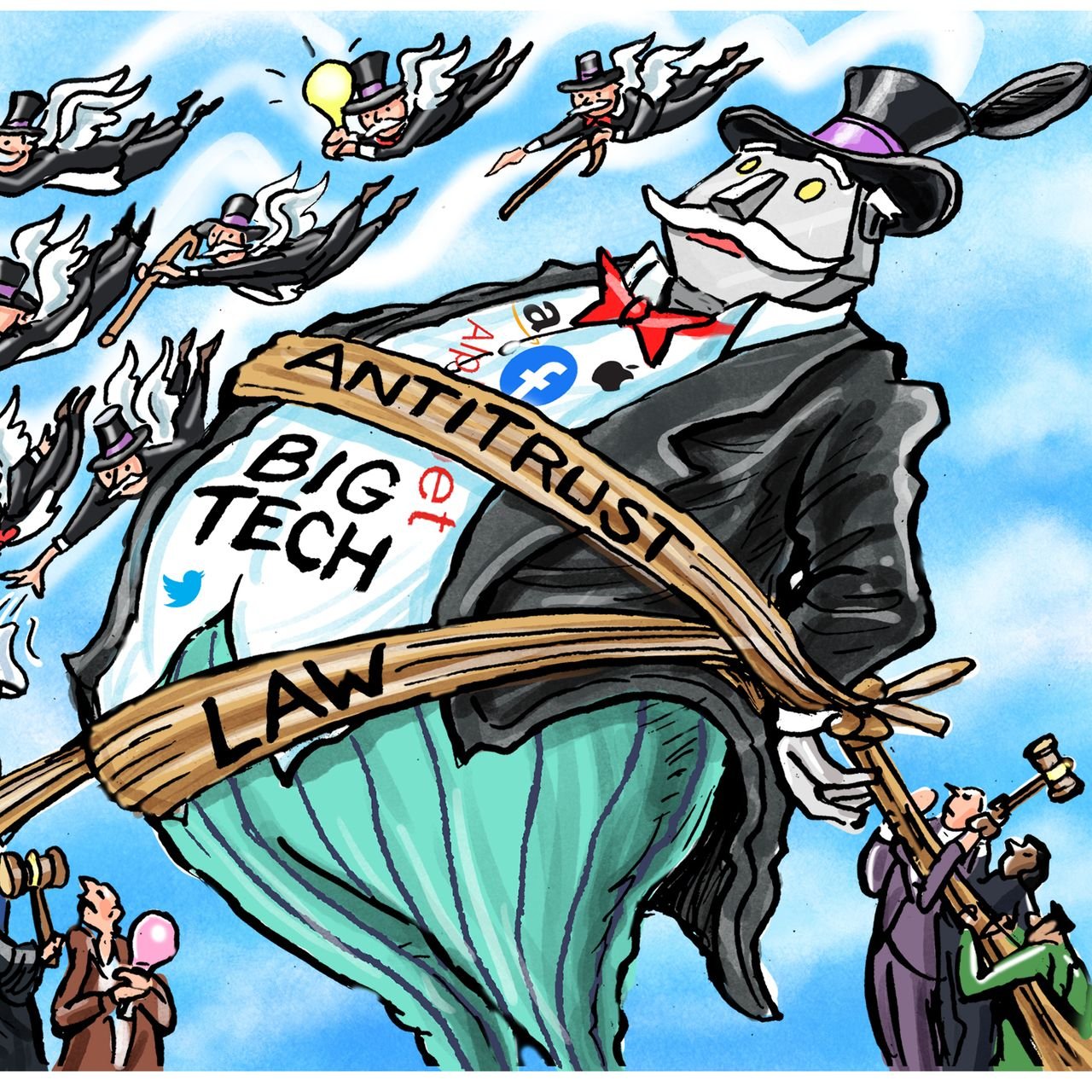
Neo Brandeis and the Broader Role of Antitrust in Preserving Democratic Health
Hunched over the illumination provided by gas light, Louis Brandeis struggled. His eyesight had begun to worsen, the large volume of required reading for his legal studies and the poor illumination provided by those same gas lights had taken their toll.In his legal practice, Brandeis would earn the label of “The People’s Lawyer,” successfully leading fights to maintain public control of Boston’s transportation, consolidate the utility companies in the area, and even began to promote the idea of state unemployment insurance. The case of Muller v. Oregon (1908) would see Brandeis’ first appearance before the United States Supreme Court; it is before this courtroom that Brandeis would provide a brief relying more on social and scientific data than on legal citations. Later known as the Brandeis brief, this style of briefing before the Court would play a major role in cases like Brown v. Board of Education (1954), where the need to demonstrate the harm of segregated education was paramount.
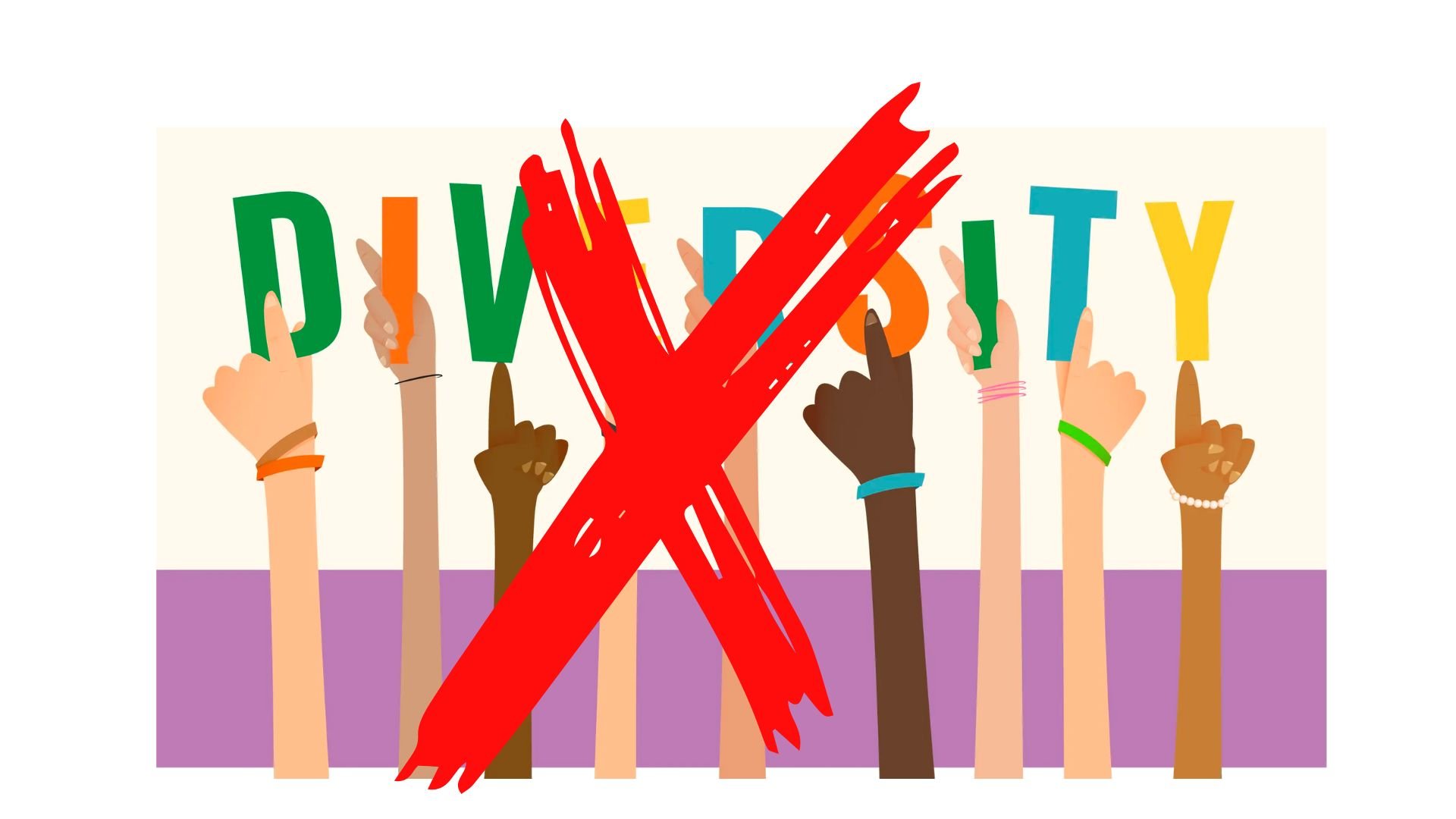
An End to Affirmative Action
The June 29th SCOTUS decision of Students for Fair Admissions (SFFA), Inc v. President and Fellows of Harvard College striking down affirmative action brought forth nationwide controversy regarding the basis of discrimination. The end to affirmative action, a government-approved and voluntary private program granting opportunities to minorities, alters the path and definition of legal discrimination defined in previous SCOTUS decisions. Furthermore, the Court’s opinion delivered on June 29th, 2023 was divided among a majority, a concurring, and a dissenting opinion. The varying conclusions drawn by SCOTUS, while a current topic of discussion for the American public, can be clarified with historical relevance and current implications.

Letter From the Editor
My name is Vanessa Aponte, and I’ve had the pleasure of serving as the Editor-in-Chief of UNLV’s Undergraduate Law Review for the past 2½ years. As graduation approaches, I have been reflecting on this organization and my time leading it. I remember when I first found ULR in the Involvement Center, searching for any clubs that had the word “law” in it. Amidst a pandemic and a severe bout of imposter syndrome, the newly-founded Undergraduate Law Review spoke to me. I applied for a leadership position and, even after underestimating my ability, I was given the opportunity to serve as an inaugural Associate Editor. After months of editing articles and helping writers through the process, my dedication was rewarded with the position of Editor-in-Chief. The rest is history.

Abortion: Troubling Legal Concerns in a Post-Roe America
In 1839, someone reading a copy of the New York Sun may have noticed an advertisement addressed to married women from a physician named “Madame Restell,” claiming to have medicine that would “alleviate private difficulties” and “remove obstructions.” After mailing Madame Restell a few dollars, a person would receive a powder or some pills that contained ingredients such as pennyroyal, black draught, ergot of rye, and motherwort. These ingredients sound like a recipe from Hocus Pocus, but Madame Restell was no witch. She was an abortion provider almost two centuries ago, infamously dubbed the “Wickedest Woman in New York” due to her services. Despite her notoriety, Madame Restell’s practice shows just how prevalent the issue of abortion has been over time. Abortion is defined as the intentional termination of a pregnancy and, as far back as 1550 BCE, humans have managed unwanted pregnancies by obtaining abortions. The Center for Disease Control (CDC) reported about 620,000 abortions in 2020, or roughly 11 abortions for every 1,000 women ages 15-44. The legality of abortion in the United States used to be protected under Roe v. Wade (1973), but after the recent Supreme Court decision in Dobbs v. Jackson Women’s Health Organization (2022), Americans no longer have a federally protected right to abortion under the U.S. Constitution. This new ruling upended 50 years of precedent and triggered a wave of abortion bans across the country. As abortion becomes criminalized again in many states, it is imperative to understand the history of reproductive rights in the U.S. and the troubling legal concerns that arise in a post-Roe America.

The Laws that Change America’s Health
One of the purposes of law in civil society is, arguably, to protect the general safety and welfare of all people. Laws that protect human safety may be associated with those that prevent bodily harm or wrongdoings such as robbery or murder. Bodily harm, however, can also be a result of unsafe practices such as the unsanitary handling of food. In that case, laws are developed and implemented to promote food safety. While associations with the law are not often correlated to healthcare, nearly all commonplace civilian protections towards health and safety are guaranteed to society through a specific area of the law – health law. As described by Harvard Law, “health lawyers work on cases and policy relating to access to care, insurance coverage, difficult ethical choices, providers of care, the safety of our drugs and food supply, disease prevention and treatment” and many other complex healthcare-related issues. As a result of health law and policies implemented over the last century, people can enjoy longer, healthier lives. The history surrounding this type of law has not always been constructive. In today’s world, there exist many laws and policies that govern the healthcare world that threaten to discriminate against members of society, subsequently worsening healthcare outcomes.

The Fame in Defamation
Everything a celebrity does becomes part of the public eye in a matter of minutes. While celebrities try to keep their private life under wraps, the hopes of this happening usually fails. Pirates of the Caribbean star Johnny Depp and Aquaman star Amber Heard were no exception. Johnny Depp and Amber Heard have been caught up in a public scandal ever since their divorce in 2017. In the case of John C. Depp, II, v. Amber Laura Heard (2022), Johnny Depp (the plaintiff) sued former wife Amber Heard (the defendant) on grounds of defamation. Defamation is a false statement or claim that harms someone else’s reputation. There are two types of defamation – slander, which is in oral form, and libel, which is in written form. This accusation arose when Amber Heard wrote an op-ed for the New York Times. She wrote this article from the perspective of someone who was a victim of domestic abuse and later stated how she “felt the full force of our culture's wrath for women who speak out.” She never mentioned anyone by name in the article, but it was clear to Johnny Depp that it was about him…

Russian Nuclear Weapons and the Non-Proliferation Treaty (NPT)
Speculations of potential nuclear warfare put global citizens at unrest and Russia's announcement of tactical nuclear sharing reminded the international world of destructive prospects anticipated in 2022. On March 25 2023, President Vladimir Putin publicly declared his intention to store Russian tactical nuclear weaponry in neighboring country and longtime ally, Belarus. Bilateral relations of Belarus and Russia have recently driven Belarusian support for the 2022 Russian invasion of Ukraine. Putin’s decision, announced late March, in no way, lessened nuclear tensions between the West and Russia. Though, the United States and Russia—once engaged in neutrality—signed the United Nations’ Treaty on the Non-Proliferation of Nuclear Weapons (NPT), international attention gathered once more following Russia’s announcement, drawing a question of whether or not weapon storage in Belarusian territory violates the Non-Proliferation Treaty. Both Belarus and Russia answered that it does not, citing the United States’ own power sharing agreement among North Atlantic Treaty Organization (NATO) countries.

Monkey-ing Around: How One Monkey Shaped Copyright Law for Artificial Intelligence
“Artificial Intelligence (AI) has transcended its traditional role as a mere problem-solving tool, as it now produces stunning artworks, insightful essays, and soul-stirring music that rival those created by human beings.” The previous sentence was generated by an artificial intelligence bot, ChatGPT. Artificial intelligence has been top of mind since the rise of AI bots like ChatGPT. It has previously been used to screen job applications and make video recommendations on sites like YouTube, but now, AI can generate essays, art, music, and more with a simple prompt, bringing up questions over ownership rights. What is the legal future of AI? Can AI have intellectual property rights over the art it creates? Can humans who use AI as a tool have copyright over the art they used AI to create?

Bankruptcy Uncoded: The Biden Administration's New Changes
Student loans are a staple of higher education in this era. 43.5 million borrowers alone have federal student loan debt. The amount of student loan debt in 2022 was $1,757,200,000,000, and the average amount of student loan debt is $37,574 per student borrower. Furthermore, the average public university student will take out a whopping $31,410 to obtain their bachelor's degree. All of these numbers reveal the massive amount of debt that students in the United States incur to attend school. Many of them will not go into million-dollar careers, leaving them to spend their adult lives paying off student loans. Given the enormity of this issue, borrowers push for federal student loan forgiveness programs—but most of the laws do not come off the ground…